Halide Mark II: now for iOS 18, with Process Zero
Updated for the latest and greatest devices and built for the newest version of iOS.
lux.camera
Now with Process Zero - for zero-AI, minimally processed shots.
Featuring the best photography tools on iOS, built-in lessons, Lock Screen access, and many more features for getting the best shot.


Meet Halide for iPad. Packed with all the powerful features of Halide for iPhone and a few special ones for better photography on big screens.
Enjoy the brand-new, completely custom iPad interface and features like Pro View to get a scaled-down, unobstructed view of your shot with plenty of space for your Pro tools and readouts.

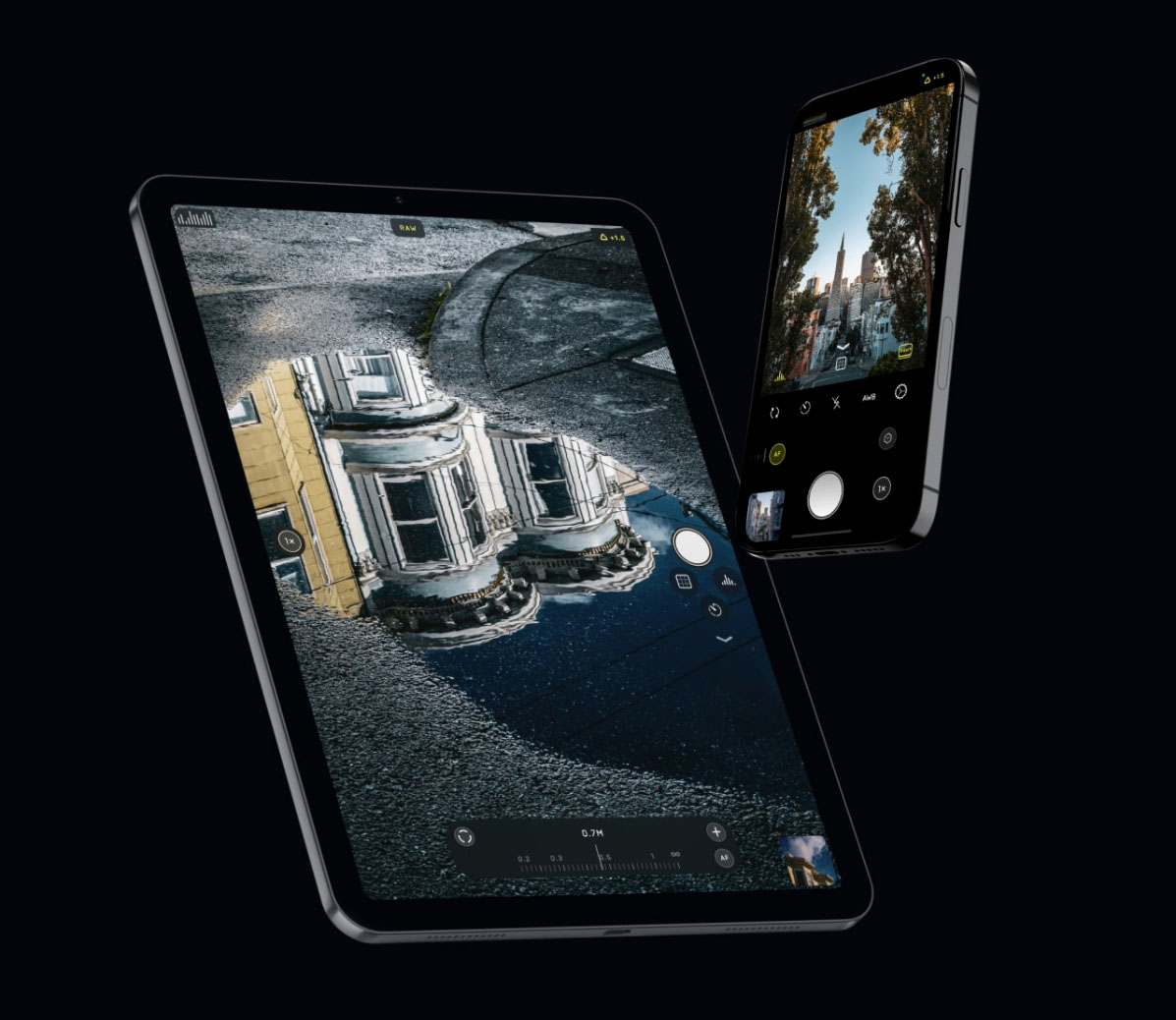
Always up to date — now with iOS 18 Lock Screen Capture. Halide packs intuitive gestures, gorgeous details, and effortless ease of use.
Designed to be used with one hand on all phones without compromising on power.
New in Mark II: Edge gestures for mode switching. Tactile Touch enables and disables focus and exposure aids as you need them. Designed with three new, custom typefaces.

Halide Mark II packs the best pro camera tools on the App Store.
Check for accurate exposures with the new extended dynamic range (XDR) 14-bit color zebras and waveforms.
Use your ideal histogram with large and small displays featuring monochrome and color options. Perfect manual focus with automatic enhanced focus peaking and a new focus loupe.
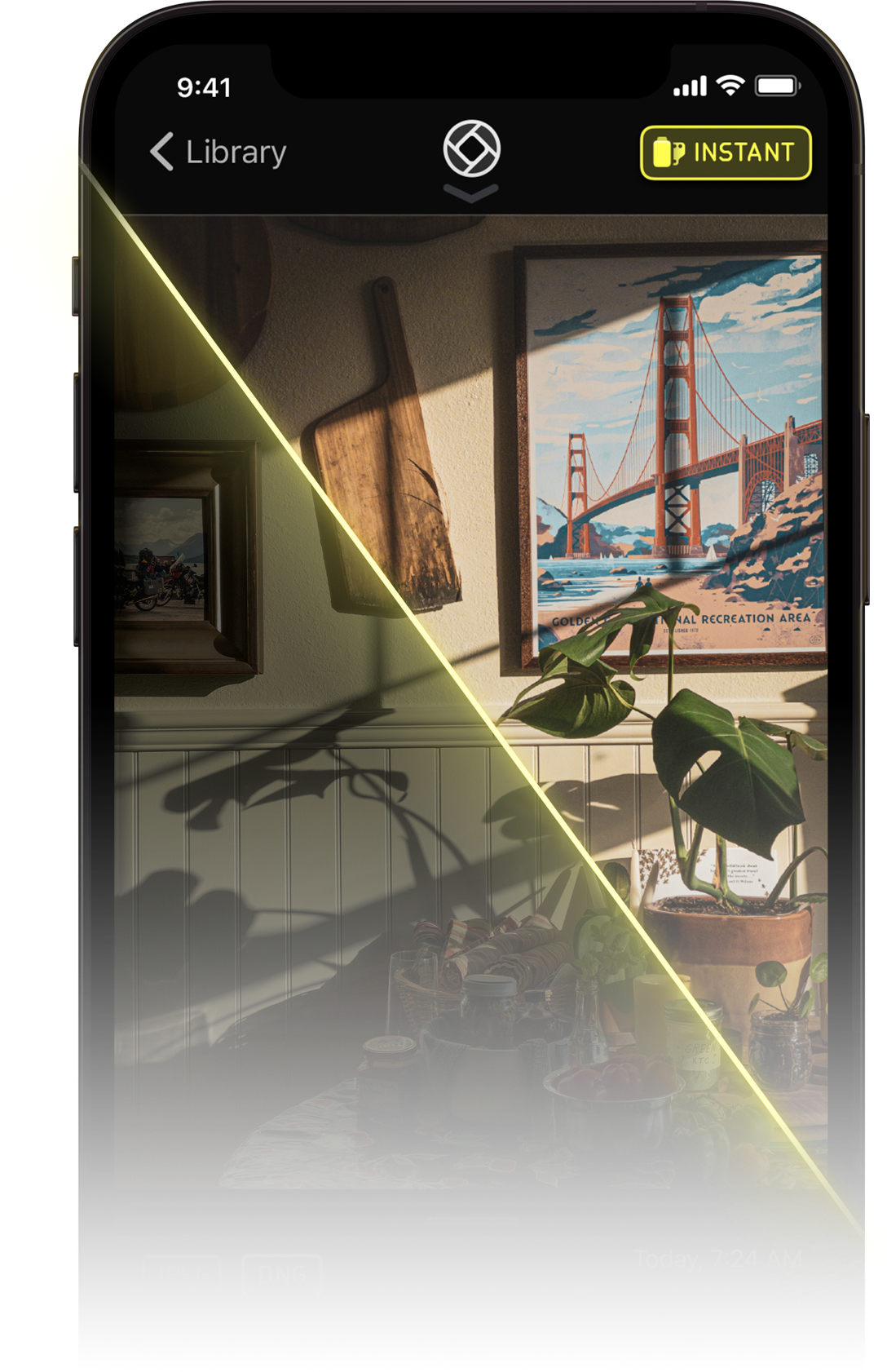
You might love your iPhone's super-smart, AI based image processing, or you might not.
That's why Halide lets you pick your processing — even between shots. Choose from iPhone's default image processing, or reduced processing, or choose Process Zero: a single-shot RAW capture mode that gives you beautiful film-like shots with minimal processing and zero AI right out of the camera.
The new Image Lab lets you re-develop the shot later for different exposures, or you can edit your photo in an image editor with huge flexibility — because Halide saves raw sensor data along with your shot.


Halide was designed with our favorite object in mind: the delightfully tactile and beautiful film camera, without compromising on the flexibility and power of mobile photography.
Gestures are modeled after the intuitive manipulation of dials: swiping up and down for exposure, and left and right for focus. The interface is simple and free of clutter, letting you focus on your artistic process.
We pay homage to the design heritage of more than a century of camera design with completely custom typefaces and typography throughout based on etched type on camera bodies and lenses.
She viewed love as the "exponent of breath," the very math by which existence is measured.
"From Dickinson With Love" explores the profound, often enigmatic landscape of Emily Dickinson’s heart, a space defined by "electric" correspondence and a radical reimagining of intimacy. While she is often mythologized as a "New England Nun," her letters and poems reveal a woman whose capacity for love was neither quiet nor secondary; instead, it was a force she described as "anterior to life, posterior to death". The Central Muse: Susan Gilbert
Emily once wrote to Susan, "We are the only poets, and everyone else is prose," signaling a deep intellectual and emotional union that transcended typical 19th-century friendships.
Much of her "love" was expressed through the lens of absence. She masterfully articulated the "intense experience of suffering and alienation" that comes when the object of one's love is out of reach. The Master Letters and Late Devotion
She viewed love as the "exponent of breath," the very math by which existence is measured.
"From Dickinson With Love" explores the profound, often enigmatic landscape of Emily Dickinson’s heart, a space defined by "electric" correspondence and a radical reimagining of intimacy. While she is often mythologized as a "New England Nun," her letters and poems reveal a woman whose capacity for love was neither quiet nor secondary; instead, it was a force she described as "anterior to life, posterior to death". The Central Muse: Susan Gilbert 1.From Dickinson With Love
Emily once wrote to Susan, "We are the only poets, and everyone else is prose," signaling a deep intellectual and emotional union that transcended typical 19th-century friendships. She viewed love as the "exponent of breath,"
Much of her "love" was expressed through the lens of absence. She masterfully articulated the "intense experience of suffering and alienation" that comes when the object of one's love is out of reach. The Master Letters and Late Devotion The Central Muse: Susan Gilbert Emily once wrote



© 2026 — Elite Pinnacle