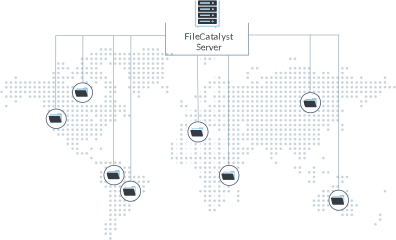
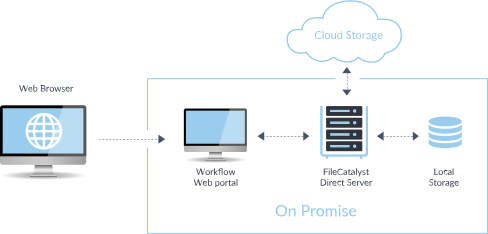
FileCatalyst Direct is a suite of server and client applications that enable point-to-point accelerated file transfers to anywhere, from anywhere at speeds of up to 10Gbps. By utilizing a patented UDP-based file transfer technology, FileCatalyst overcomes the issue of slow file transfers caused by network impairments such as latency and packet loss. FileCatalyst Direct will change your file transfer times from hours to minutes and minutes to seconds.
“Accelerating file transfers in a secure and reliable manner has given us the ability to maximize our bandwidth, and the mobile application has provided a major advantage over our competition. We couldn’t be happier with FileCatalyst.”
~ Express Media Group
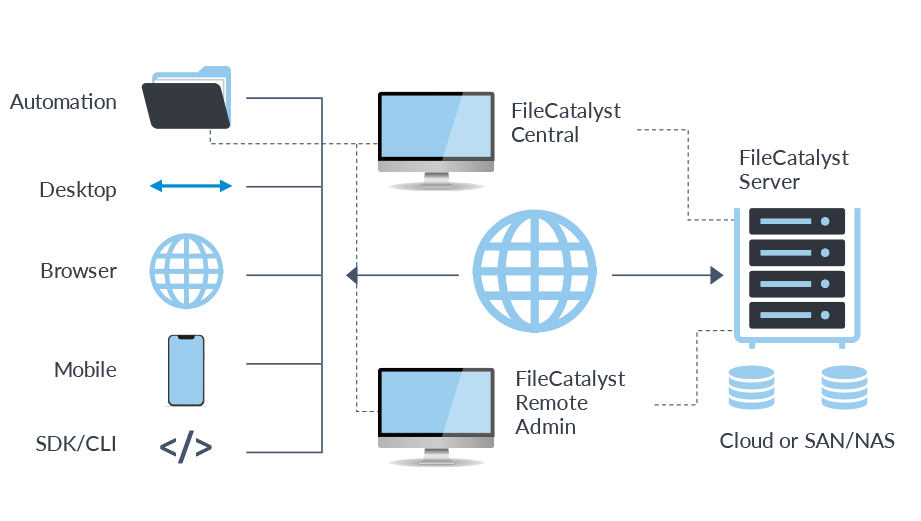
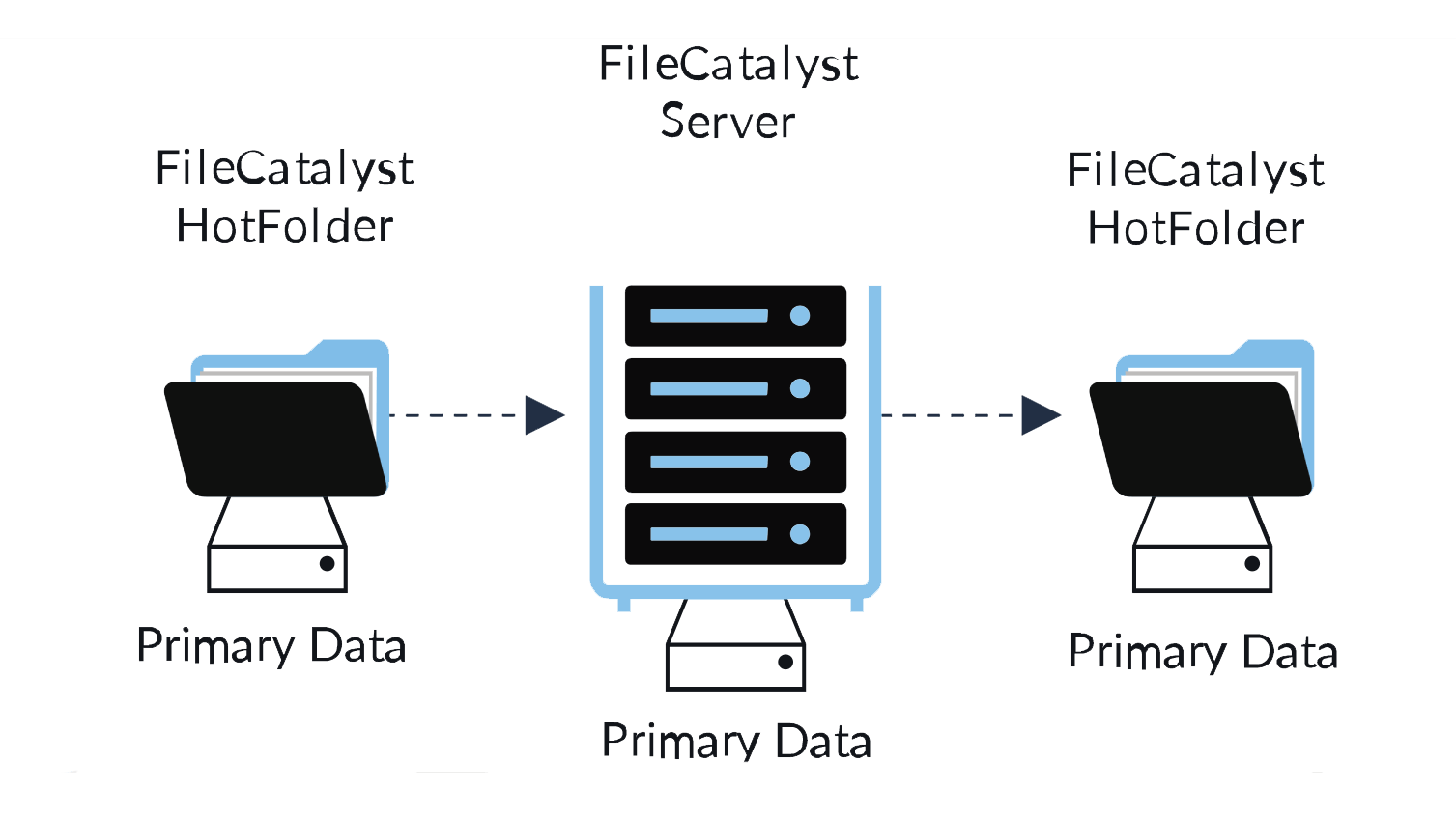
The FileCatalyst Direct suite of applications are designed to meet needs that are dependent on your specific file transfer workflow. Each application is purpose-built for a specific job, and is a culmination of our 20 years of experience helping organizations solve their file transfer issues.
FileCatalyst Server is a required component, and you can choose the client applications that fit your file transfer needs. Not sure where to begin? We dive a little deeper in our Master Fast File Transfer Applications where we explain things further.
Explore FileCatalyst Direct Applications
: It is used by the Silicon Labs IDE to recognize new device features or memory maps introduced in specific software updates.
In current Silicon Labs environments, such as Simplicity Studio , these individual .txt manifest files have largely been replaced by integrated XML device descriptions and metadata. However, developers working with may still encounter this file in the installation directories of standalone IDE versions (e.g., version 5.x). Common Locations
is a legacy system file primarily associated with Silicon Labs (formerly Cygnal Integrated Products) development tools for 8-bit microcontrollers. It serves as a technical log or index for memory-specific configurations and updates within the Silicon Labs IDE . Key Technical Roles
: In older toolsets, 64KNEW.txt functioned as a "What's New" manifest, specifically detailing enhancements for high-memory density chips (those reaching the 64KB boundary). Context in Modern Development
: The "64K" in the filename refers to the 64KB address space limitation common in 8051-based microcontrollers. The file often contains parameters for managing code banking or extended memory access.
If you are looking for this file on a local machine, it is typically found in: C:\Silabs\MCU\IDEfiles\ The root directory of older development kits.
Copyright © 2025 QC Infotech Website Designed By Nextwebi